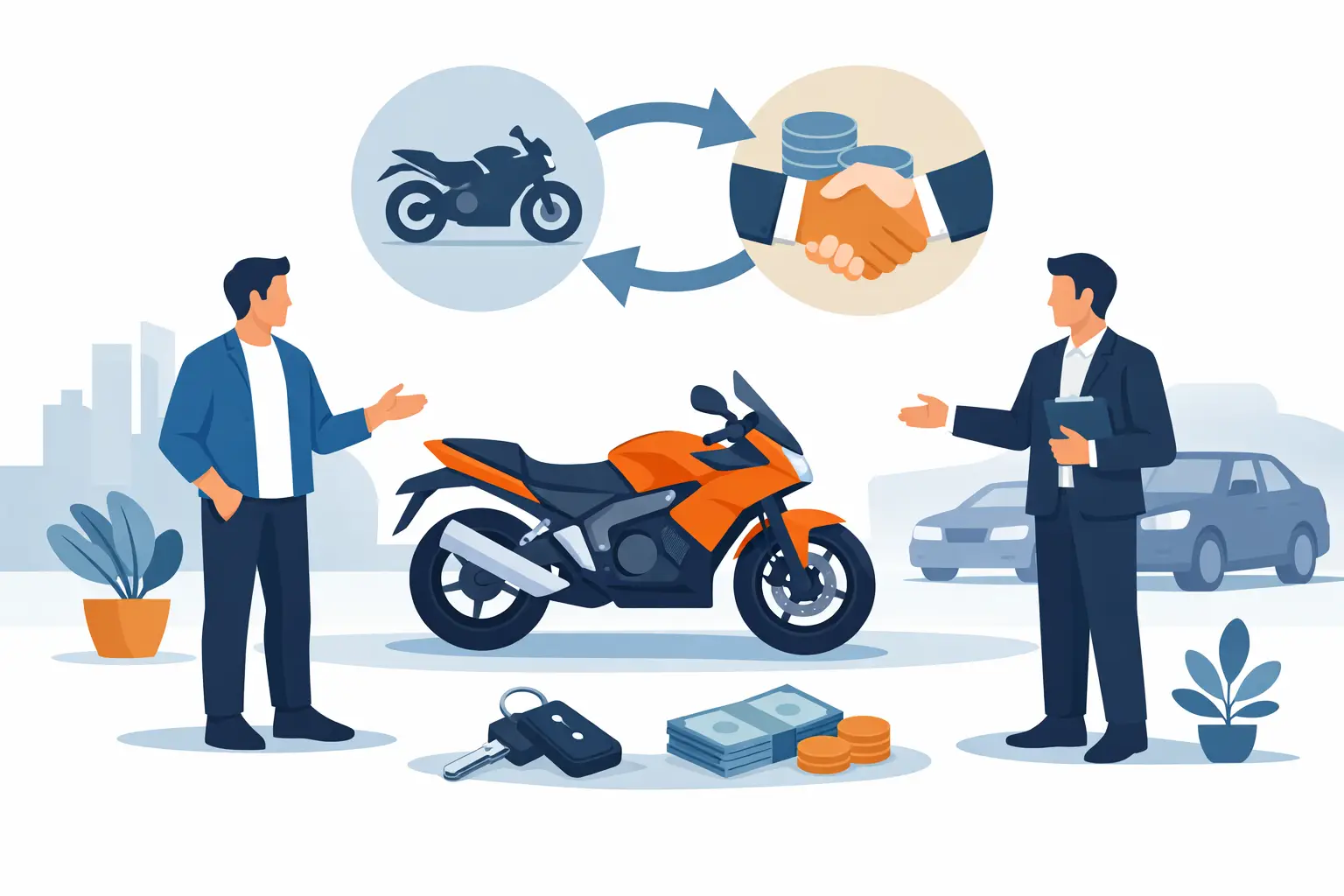
A trade-in can be the fastest way to move from a bike that no longer fits your riding style to one that does. But knowing how to trade motorcycle ownership wisely means looking beyond the first number offered. Your bike’s condition, current loan balance, local demand, and the motorcycle you want next all affect the deal.
For North Texas riders, trading at a dealership can simplify a major purchase. Instead of handling listings, test rides with strangers, title questions, and payment concerns on your own, you can apply your current motorcycle’s value toward your next ride. The key is arriving prepared and evaluating the complete transaction, not just the trade figure.
How to Trade a Motorcycle Without Guesswork
Start by defining what a successful trade looks like for you. Are you moving from a lighter cruiser to a touring model for longer weekends? Do you want more passenger comfort, storage, technology, or highway power? Or is your priority simply lowering the cost of your next motorcycle?
That answer changes how you should evaluate an offer. A strong trade value matters, but it is only one part of the purchase. The price of the motorcycle you are buying, available promotions, financing terms, accessories, and any remaining payoff on your current loan all belong in the same conversation.
Before you visit a dealership, gather the basics: your title if you own the motorcycle outright, or your lender information and account number if there is a loan. Bring all keys, including spare fobs, along with service records, manuals, and any original parts you still have. These details show that the motorcycle has been cared for and can make the appraisal process more accurate.
Know What Your Motorcycle Is Worth
Online valuation tools can give you a helpful starting range, but they are not a final offer. A real appraisal accounts for details a generic estimate cannot see: cosmetic condition, tire life, maintenance history, installed accessories, local inventory, seasonal demand, and whether your model is especially desirable in the current market.
Look at comparable motorcycles honestly. A clean, well-maintained bike with documented service is not comparable to the cheapest example you find online. At the same time, advertised prices are not always selling prices. Private sellers may ask more because they expect negotiation, while a dealer must factor in inspection, reconditioning, warranty considerations, and the cost of putting the bike back into inventory.
Use market research to set realistic expectations, not to prove that every asking price is your bike’s exact value. The goal is to know whether an appraisal is in a reasonable range and to understand which parts of your motorcycle support that number.
Prepare the Bike Before the Appraisal
You do not need to spend hundreds of dollars chasing perfection before trading your motorcycle. In fact, major repairs or upgrades rarely return every dollar you put into them. But basic presentation matters because it makes inspection easier and signals responsible ownership.
Wash the motorcycle, remove personal items from saddlebags or storage compartments, and check that lights, signals, horn, controls, and electronics work as expected. Inflate the tires to the proper pressure and make sure the battery is charged. If there is a warning light, a mechanical concern, or accident history, be direct about it. Surprises found during an inspection can slow the process or change the value later.
Accessories can help, especially practical equipment such as luggage, backrests, upgraded seats, windshields, and security features. Their value depends on the model and the buyer. Keep any stock take-off parts if you have them. Sometimes a dealership can use them to broaden the motorcycle’s appeal or restore a more original configuration.
Understand Your Loan Payoff Before You Trade
If you still owe money on your motorcycle, request a current payoff amount from your lender. This is different from your regular monthly balance because it includes interest through a specific date and may include a small processing fee. Ask how long the payoff quote is valid.
Then compare the payoff amount with the estimated trade value. If your motorcycle is worth more than the payoff, you have positive equity. That equity can be applied toward your next purchase, helping reduce the amount financed.
If you owe more than the motorcycle is worth, you have negative equity. You can pay the difference at trade-in, keep the current bike longer while paying down the loan, or in some cases include the difference in financing for the next motorcycle. Rolling negative equity into a new loan may be workable, but it increases the amount borrowed and can leave you upside down again if you trade too soon.
This is where a clear deal worksheet matters. Ask to see the purchase price, trade allowance, payoff, down payment, taxes and fees, accessories, protection products if selected, and financing terms. A low monthly payment can look attractive while concealing a longer term or a larger total amount financed. Focus on the full picture.
Compare a Trade-In With a Private Sale
A private sale may bring a higher gross price, particularly for a rare, low-mileage, or highly customized motorcycle. It also requires time, patience, and a willingness to manage the sale yourself. You will need to create the listing, answer messages, schedule viewings, handle test rides safely, verify payment, and complete title transfer correctly.
A dealership trade usually offers less than the highest possible private-party sale because the dealership takes on reconditioning and resale risk. In return, you gain convenience and speed. You can complete the appraisal, select your next motorcycle, discuss financing, and hand over your current bike in one place.
For many riders, the deciding factor is not whether a private sale could produce more money on paper. It is whether the extra money is worth weeks of effort, uncertainty, and the possibility that the bike will not sell before the motorcycle you want is gone.
Choose the Right Time to Trade
Motorcycle demand can shift with weather, riding season, inventory levels, and new model arrivals. Spring often brings more buyers into the market, while late fall and winter may create opportunities for riders who are flexible and focused on upgrading before the next season.
Still, timing is not everything. A motorcycle in excellent condition with clean documentation can appraise well at any time of year. More importantly, trade when your current bike no longer serves the way you ride. Waiting for a perfect market can mean missing an available model, a favorable financing program, or another opportunity that fits your plans better.
If you are considering a larger cruiser, bagger, or touring motorcycle, think about your actual riding calendar. A test ride can tell you more about comfort, weight, seating position, and wind protection than a spec sheet ever will. Bring your usual passenger when appropriate, and consider the gear and luggage you normally carry.
Make the Dealer Conversation Productive
When you arrive, be open about your goals. Explain what you ride now, what you want to change, and whether you have a payoff. A good dealership team can help match your needs to the right category and show how your trade fits into the purchase.
Ask questions about the appraisal rather than treating it like a mystery. If the value is lower than expected, find out why. It may be mileage, tires, service needs, cosmetic damage, market demand, or a loan payoff that is separate from the bike’s actual value. Understanding the reason helps you make a better decision.
At Denton Indian Motorcycle®, riders can evaluate a trade while exploring new and pre-owned options built for everything from local rides to long-distance travel. That one-stop approach is especially useful when you want to compare motorcycles, review financing, and plan for service or accessories without bouncing between sellers.
Do not rush into extras you do not want, but do consider the ownership costs that matter to you. A new seat, luggage setup, riding gear, maintenance plan, or tire replacement can affect your budget and your first season on the new bike. The best next motorcycle is one you can enjoy confidently after the paperwork is complete.
Trading your motorcycle should feel like a step forward, not a compromise. Come prepared, ask for the full numbers, and choose the ride that gives you a reason to take the long way home.