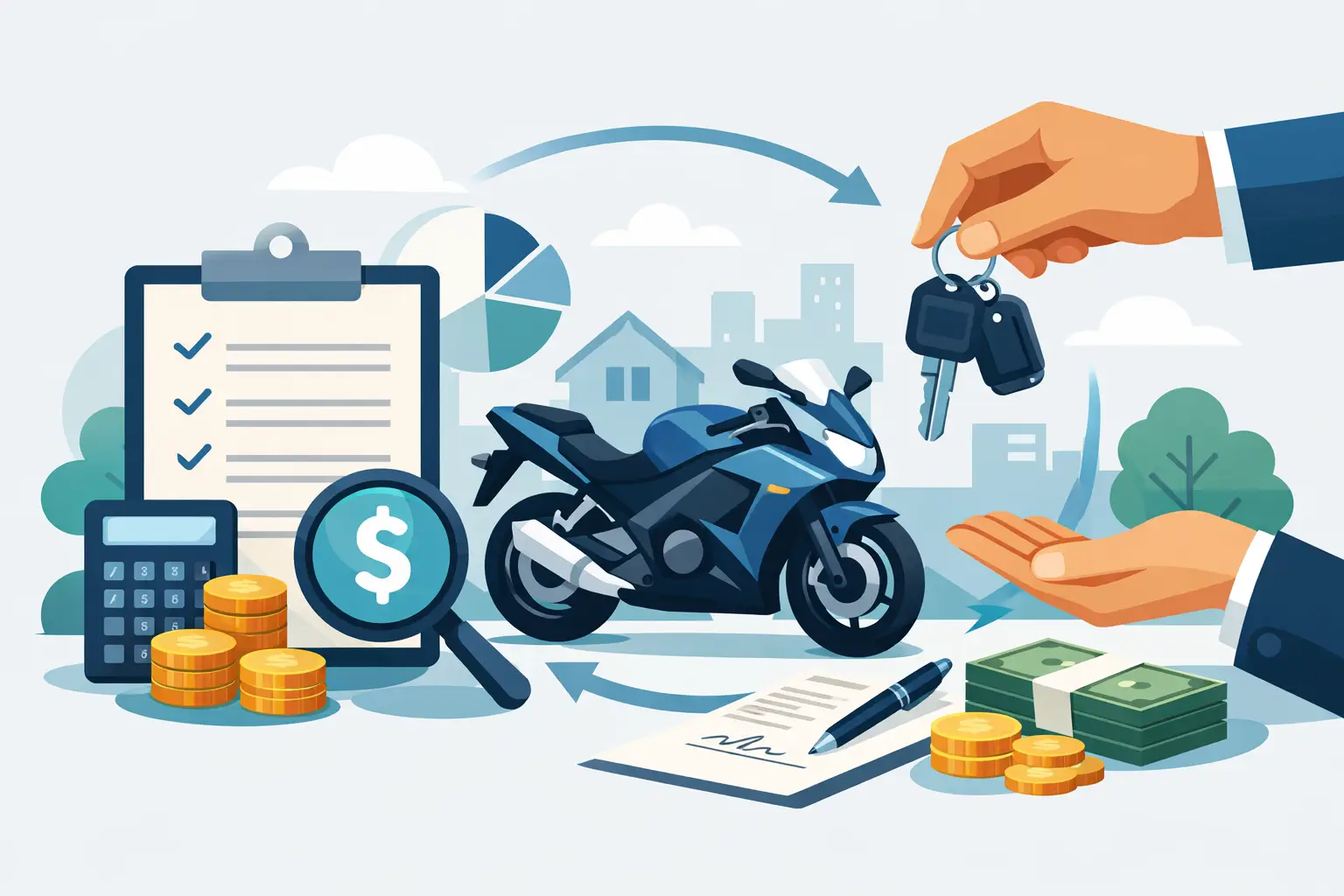
A motorcycle payment should leave room for the miles ahead. Before you choose a new Indian Motorcycle, a pre-owned bike, or the model that has been on your mind for years, knowing how to finance a motorcycle helps you shop with a clear number in mind instead of focusing only on the sticker price.
For North Texas riders, the right financing plan is usually a balance: enough bike to suit the way you ride, a payment that fits your monthly budget, and terms that do not turn a great purchase into an expensive one. A little preparation can make that balance much easier to find.
Start With the Total Cost, Not Just the Payment
A low monthly payment can look appealing until you see what created it. In many cases, the payment is lower because the loan term is longer. That can make a premium touring motorcycle or bagger feel more accessible month to month, but you may pay more interest over the life of the loan.
Start by estimating the full out-the-door cost. This includes the motorcycle price, sales tax, title and registration costs, documentation fees, and any accessories or protection products you choose to include. If you plan to add luggage, upgraded seats, performance accessories, riding gear, or a service plan, decide whether those items belong in the loan or should be paid separately.
Then work backward from a payment you can comfortably make every month. Remember that ownership goes beyond the note. Insurance, fuel, maintenance, tires, registration, and riding gear all deserve a place in your budget. A payment that works on paper but leaves no room for regular service is not a comfortable ownership plan.
Check Your Credit Before You Shop
Your credit profile is one of the biggest factors in the loan offers available to you. Lenders generally consider your credit history, income, current debt, loan amount, down payment, and the motorcycle’s age and value. Stronger credit can improve your chance of qualifying and may lead to a lower annual percentage rate, or APR.
Review your credit report before applying. Look for errors, outdated account information, or balances that may be reported incorrectly. If your score needs work, paying down revolving credit balances and making every payment on time can help over time. If you are ready to buy now, do not assume a less-than-perfect score means financing is out of reach. It may simply mean your down payment, loan term, or rate needs a closer look.
Be prepared to provide basic financial information. Most lenders or dealership finance departments will ask for identification, proof of income, proof of residence, insurance information, and details about a trade-in, if you have one. Having these ready can keep the process moving when you find the right motorcycle.
Compare Your Motorcycle Financing Options
Motorcycle financing is not one-size-fits-all. The best route depends on your credit, the bike you are purchasing, how long you plan to keep it, and whether convenience or rate flexibility matters most to you.
A dealership finance department can submit an application to lending partners and help you compare available terms in one place. That is especially useful when you want to finalize a purchase, value a trade, and arrange financing without coordinating several separate transactions. At Denton Indian Motorcycle, riders can discuss available financing options alongside the motorcycle and ownership needs they are considering.
A bank or credit union loan may be worth comparing, particularly if you already have an established relationship or qualify for a competitive rate. Some lenders offer secured motorcycle loans, where the bike serves as collateral. Personal loans are another option, though rates may be higher because the loan is often unsecured.
The key is to compare offers using the same details. Look at the APR, loan term, total amount financed, monthly payment, down payment requirement, and whether there is a prepayment penalty. Do not compare payments alone. Two loans with the same payment can have very different total costs.
Choose a Loan Term That Fits Your Plan
Loan terms for motorcycles can vary widely. A shorter term usually creates a higher monthly payment but reduces the total interest paid. A longer term lowers the monthly payment, which can be useful if it keeps your budget healthy, but it may cost more over time.
Consider how long you expect to own the motorcycle. If you tend to trade up every few years, financing far beyond that timeline can leave you with a payoff balance that is higher than the bike’s trade value. This is sometimes called being upside down on a loan. It can limit flexibility when you are ready for your next cruiser, touring model, or performance-focused ride.
There is no single ideal term. A rider with substantial savings and stable income may prefer a shorter loan. Another rider may choose a longer term to preserve cash for insurance, accessories, and the first season of riding. The better choice is the one that supports your full budget without stretching it.
Use a Down Payment and Trade-In Strategically
A down payment reduces the amount you need to borrow. It can lower the monthly payment, reduce interest charges, and improve the loan-to-value ratio from a lender’s perspective. Even a modest down payment can make a meaningful difference, especially on a higher-value motorcycle.
A trade-in can work much the same way. If you have an existing motorcycle, get a realistic appraisal before making decisions based on its value. Clean it up, gather service records, bring keys and accessories, and be honest about its condition. A trade-in is convenient because its value can be applied directly to the transaction, but it is still smart to understand how the offer compares with your remaining loan payoff.
If you owe more than your current bike is worth, that negative equity may be rolled into the new loan. Sometimes that is a practical choice, but it increases what you finance and can extend the time it takes to build equity in the next bike. Ask for a clear breakdown before agreeing to roll a balance forward.
Get Pre-Approved, Then Keep the Numbers Honest
Pre-approval can give you a useful budget range before you visit a dealership. It tells you what a lender may be willing to finance and helps you focus on motorcycles that match your financial picture. It is not always a final approval, since the lender may still need to review the specific vehicle and final transaction details, but it is a strong starting point.
When discussing financing, ask for the buyer’s order and loan disclosures to be explained clearly. You should know the selling price, trade allowance, payoff amount, cash down, taxes and fees, optional products, amount financed, APR, finance charge, number of payments, and total of payments. If any figure is unclear, pause and ask. A professional dealership should be comfortable walking through the details.
Avoid adding products simply to reach a preferred payment. Some products can be valuable depending on your riding habits, mileage, storage situation, and financial priorities. Others may not fit your needs. Decide based on the protection or service you receive, not only on how small the monthly change appears.
A Smart Way to Finance a Motorcycle
The most effective way to finance a motorcycle is to arrive with a budget, compare the full terms of each offer, and make decisions based on total cost as well as monthly payment. Leave room for the ownership experience you actually want: routine maintenance, the right gear, weekend fuel stops, and the occasional long route that was not part of the plan.
When the numbers are clear, you can spend less time second-guessing the purchase and more time choosing the motorcycle that makes you want to take the long way home.