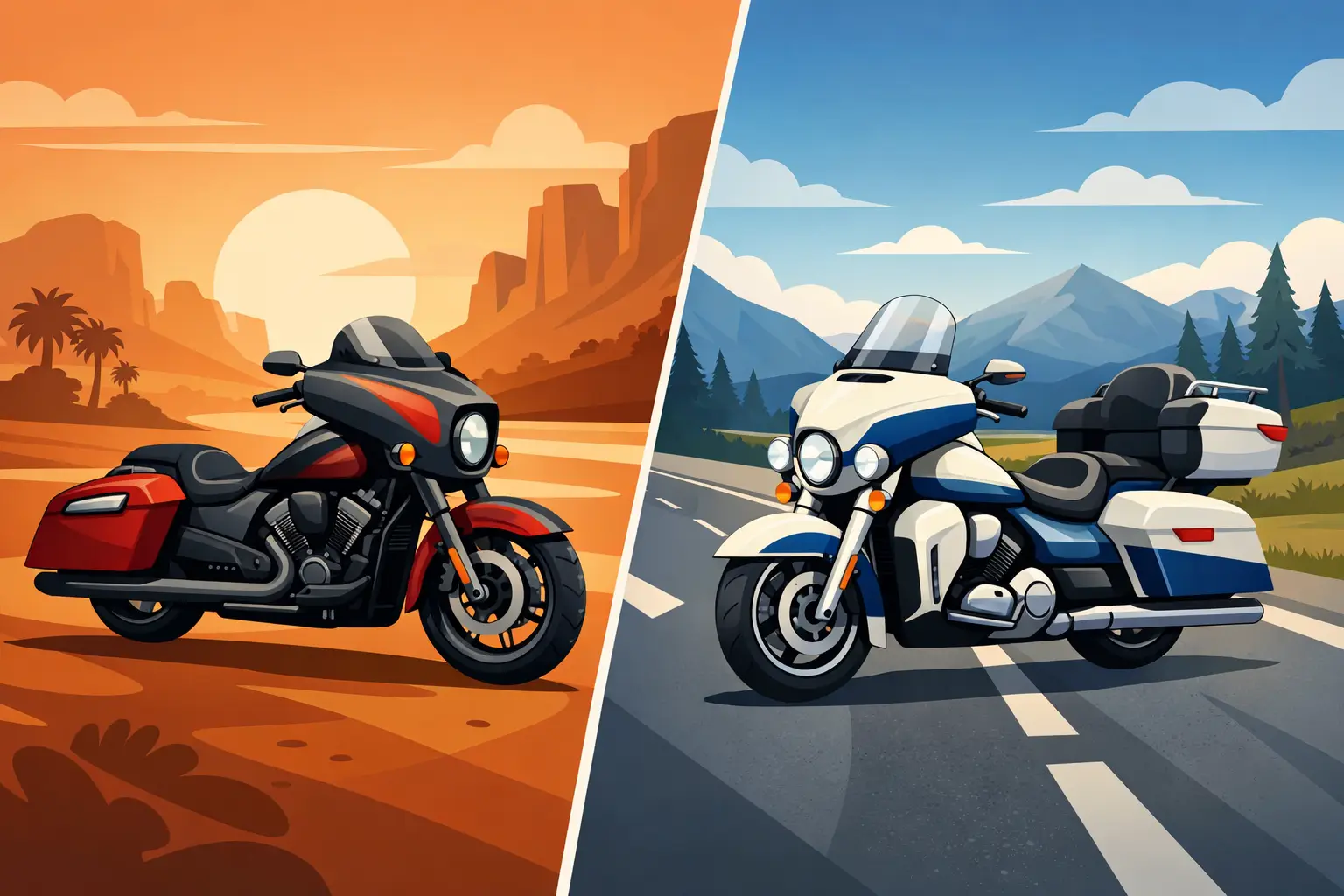
A motorcycle can look perfect on the showroom floor and still be the wrong fit 300 miles later. The Indian bagger vs touring decision comes down to how you actually ride: where you go, who comes with you, what you carry, and how many hours you want to spend in the saddle before calling it a day.
For North Texas riders, that distinction matters. A Saturday ride through the backroads outside Denton may call for a different motorcycle than a multi-state trip through the Hill Country, across Oklahoma, or toward the Rockies. Both categories deliver premium American V-twin character, serious road presence, and useful long-distance features. The better choice is not about which bike is more capable. It is about which one better matches your routine.
Indian Bagger vs Touring: The Core Difference
An Indian bagger is built around a streamlined custom profile with hard saddlebags, a front fairing, and a lower, more connected riding feel. It is the motorcycle for riders who want storage and wind protection without moving into the full-size touring-bike footprint. Models such as the Indian Challenger and Chieftain show why baggers remain so popular: they have the equipment to leave town for the weekend, but they still feel at home rolling into a local bike night or taking the long way home after work.
An Indian touring motorcycle adds more of what makes consecutive long days on the road easier. Think greater passenger accommodation, more weather protection, a larger overall presence, and the kind of luggage capacity that makes packing for a real trip less of a compromise. The Indian Roadmaster is a clear example. It is designed for riders who see the destination as only part of the experience and expect to cover serious distance in comfort.
There is overlap. A well-equipped bagger can handle a long trip, and a touring model can certainly be ridden on a short afternoon route. The deciding factor is what you do most often, not what you might do once a year.
Why Many Riders Choose an Indian Bagger
A bagger gives you a strong middle ground between a traditional cruiser and a full touring motorcycle. The hard saddlebags are ready for rain gear, a jacket, tools, groceries, or enough clothing for a weekend away. You do not have to strap everything to the passenger seat, and you do not have to commit to the larger top-case profile of a full touring model.
The visual appeal is a major part of the equation. Indian baggers have a low, long silhouette that feels purposeful without looking overloaded. For riders who want to personalize their motorcycle, the bagger platform also offers plenty of room for accessories and styling choices, from performance parts to upgraded seats, handlebars, lighting, and audio.
Handling is another reason. While these are still substantial motorcycles, baggers generally feel less bulky at parking-lot speeds and in daily riding than a fully dressed touring machine. If your rides include city traffic, quick stops around town, or frequent solo trips, that can make a meaningful difference. The lower-profile setup is often easier to live with when the motorcycle is not loaded for travel.
A bagger is likely the better fit if you mostly ride solo, pack light, and prefer a sharper custom look. It also makes sense for a rider upgrading from a cruiser who wants more wind protection and storage but is not ready for the size of a full touring platform.
The Bagger Trade-Off
The same streamlined design that gives a bagger its appeal can limit its long-range comfort for two people. Saddlebags offer useful capacity, but they do not match the combined space of hard bags and a trunk. Passenger back support may also be less substantial, depending on the model and accessories.
That does not make a bagger a poor choice for travel. It simply means you need to pack with intention and be realistic about your passenger’s expectations after several long days in the seat.
What an Indian Touring Motorcycle Does Better
Touring motorcycles are built for the rider who does not want luggage, weather, or passenger comfort to dictate the route. A touring model typically adds a trunk with a passenger backrest, broader protective bodywork, more space for gear, and a more settled feel when fully loaded. Those details become increasingly valuable after hour four, after the temperature drops, or when a trip requires more than one change of clothes.
For couples who ride together regularly, the passenger experience should carry real weight in the decision. A comfortable passenger is more likely to enjoy the miles, stay relaxed through changing conditions, and say yes to the next trip. The larger seating area and supportive trunk-backed setup of a touring model can make the difference between an occasional passenger and a dependable riding partner.
Touring bikes also shine on long highway stretches. Extra wind management can reduce fatigue, especially when North Texas weather shifts from summer heat to a cool morning or when an open interstate route brings steady crosswinds. With more storage, you can bring rain layers, cold-weather gear, personal items, and travel essentials without playing a game of luggage Tetris.
For riders planning overnight trips, rallies, or extended vacation travel, this capacity is not just a luxury. It is practical. You can carry what you need without turning the motorcycle into a pile of strapped-on bags.
The Touring Trade-Off
More capability brings more motorcycle. A full touring model is heavier, larger, and more noticeable when maneuvering in a tight garage, gas-station lot, or crowded restaurant parking area. Riders with shorter inseams or those new to heavyweight motorcycles may prefer to spend time getting comfortable with the bike’s low-speed balance before committing to a long trip.
The larger profile also has a specific style. Some riders love the commanding, full-dress look. Others want the cleaner lines of a bagger and would rather add luggage only when needed. Neither preference is wrong, but it should be honest. Buy the motorcycle you will want to ride on an ordinary Wednesday, not just the one that looks best in a vacation photo.
How to Choose Between a Bagger and a Touring Model
Start by looking at your last ten rides. If most were solo rides under a few hundred miles, with an occasional overnight trip, a bagger may offer the best balance. You get real storage, wind protection, and a premium road-going platform without carrying more motorcycle than you regularly need.
If those rides included a passenger, multiple days away, or the need to pack for varying weather, touring is worth a close look. The trunk, passenger support, and added protection are features you will appreciate when the ride gets longer than planned.
Your route matters, too. Riders who spend most of their time on backroads and around town may value a bagger’s more compact feeling. Riders who log interstate miles, cross state lines, and travel with a partner may find that a touring motorcycle earns its size quickly.
Do not overlook the ownership side. Consider where you will park the bike, whether you can comfortably move it around at home, and what accessories you expect to add. A seat upgrade, heated grips, audio, luggage liners, and rider comfort equipment can change how either category works for you. The right configuration matters as much as the category on the badge.
Take a Real Test Ride Before You Decide
Specifications tell part of the story, but seat time tells the rest. Sit on both motorcycles with your usual riding gear. Reach the controls. Put both feet down. Picture loading your own jacket, helmet, rain gear, and travel bag. If you often ride two-up, bring your passenger into the process and let them evaluate the seat, back support, and room for a full day.
During a test ride, pay attention to more than acceleration and sound. Notice slow-speed confidence, wind coverage, seating position, reach to the floorboards, and how naturally the motorcycle settles into a turn. A bike that feels right in the first few minutes often becomes a better long-term partner.
At Denton Indian Motorcycle®, riders can compare the fit and purpose of different Indian models in person, discuss new and pre-owned options, and plan for the accessories, financing, trade-in, and service support that come with ownership. The goal is not to force a bagger or a touring motorcycle into every rider’s life. It is to put you on the machine that makes you look for the next reason to ride.
Choose the bagger if your rides call for versatile style, practical storage, and a leaner daily presence. Choose touring if the miles are longer, the passenger matters, and packing light is not part of your travel plan. Either way, the best motorcycle is the one that has you checking the forecast, filling the tank, and taking the long route home.